If you love boating, Coral Gables can feel like a dream. But the right waterfront home depends on more than a great view. Bridge clearance, canal depth, seawall condition, and wake rules can make or break your daily routine on the water. You deserve clear answers before you buy.
This guide breaks down key waterfront terms, the measurements to verify, how permitting works, and what to know about insurance and resilience. You will also get a practical checklist to match a property’s features to your boat. Let’s dive in.
Key waterfront terms to know
Bridge types and clearance
A fixed bridge has a set vertical clearance. That height limits any boat with a tall mast or high hardtop. If your air draft exceeds the clearance at mean high water, you cannot pass.
Movable or draw bridges open to allow taller boats through. They can come with opening schedules, delays during peak hours, and extra coordination. Always ask: What is the posted vertical clearance at mean high water, and does the bridge open on demand or on a schedule?
Canal vs bay access
Bayfront access, such as direct access to Biscayne Bay, usually means deeper water and faster runs to offshore fishing and cruising. You will also feel more wind, wakes, and storm surge.
Canal access is more sheltered and often calmer for docking. It can also be narrower and shallower with slow-speed or no-wake zones. Your boat’s draft, length, and maneuvering room must match the canal’s depth and width, plus any bridge constraints.
Dockage and lifts
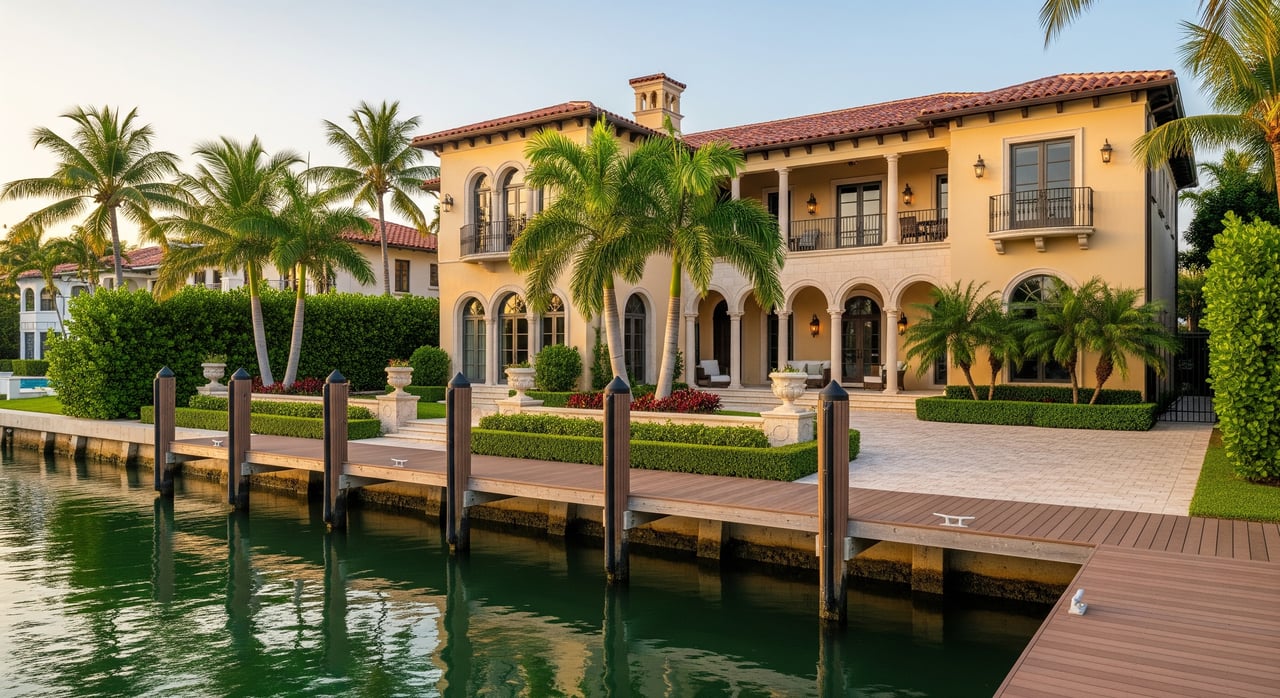
Common setups include fixed docks tied to a seawall, floating docks that ride the tides, and T-docks or finger piers. A boat lift can reduce hull growth and corrosion, but it must match your vessel’s weight and beam. Confirm lift capacity, manufacturer specs, power availability, and maintenance history.
Seawalls and shorelines
A seawall or bulkhead protects the lot and supports the dock. Its condition affects insurability and future costs. Look for leaning, cracks, voids, or undermining. Natural shorelines or mangroves provide storm buffering but are highly regulated. Do not assume trimming or removal is allowed.
Wake zones and operation limits
No-wake and slow-speed zones are common in canals, marinas, and environmentally sensitive areas. These rules affect travel time to open water and reduce shoreline erosion. Expect local enforcement, and plan your boating schedule around posted restrictions.
Measurements to verify
- Usable dock length and distance from the seawall to the dock end
- Water depths at mean low water at the dock and along the entire route to open water
- Vertical bridge clearance at mean high water for every bridge you must pass
- Canal or channel width at tight turns and narrow spots
- Typical transit time to Biscayne Bay and the nearest fuel or service marina
- Locations of submerged hazards, shoaling, or shallow flats along your path
Get this information from a marine surveyor, recent depth soundings, dock plans, and up-to-date charts. Depths can change after storms due to shoaling, so favor recent data.
Inspections and reports to order
- Dock and lift inspection by a licensed marine contractor or structural engineer
- Seawall inspection for signs of failure, scouring, or undermining
- Marine surveyor review if a boat is included or to verify fit and safe mooring
- Certified FEMA Elevation Certificate to support flood insurance and confirm finished floor elevation versus Base Flood Elevation
- Environmental review if mangroves or seagrass are present and you intend to trim or modify the shoreline
Ownership and rules to confirm
- Private docks, lifts, and seawalls are typically your responsibility for maintenance and permitting
- Shared facilities are often governed by an HOA, including cost-sharing, boat size caps, and guest policies
- Verify recorded easements, riparian rights, and any covenants that limit commercial use or transient mooring
Permits and who regulates what
Agencies and roles
Waterfront work in Coral Gables can involve the City of Coral Gables Building and Zoning Departments, Miami-Dade County environmental and permitting teams, the Florida Department of Environmental Protection, the U.S. Army Corps of Engineers, the U.S. Coast Guard for navigation and bridge rules, and the Florida Fish and Wildlife Conservation Commission for boating laws.
Your exact path depends on the scope of work. New docks, lift installations, seawall repairs, and any dredging can trigger different permits at multiple levels.
Environmental constraints
Mangrove trimming and removal is tightly regulated. Seagrass impacts from prop scarring or shading may require mitigation or design changes, such as open-pile docks. Dredging, even small-scale, often faces strict review and potential mitigation requirements. Expect conditions that limit runoff and protect coastal habitats.
Bridges and openings
Drawbridges follow federal and regional rules. Some open on demand, others on a schedule, and some have restrictions during peak traffic. Fixed bridge clearance is measured relative to mean high water. Always verify the source and measurement standard.
Wake zones and enforcement
City and county authorities post local zones, and FWC enforces statewide boating safety. Observe channel markers and speed boundaries to avoid fines and protect neighbors and shorelines.
Insurance and resilience planning
Flood zones and elevation
Many Coral Gables waterfront homes fall within FEMA flood zones, including AE and VE designations. An Elevation Certificate and Flood Insurance Rate Maps drive underwriting and premiums. VE zones carry stricter building requirements and higher premiums. Compare NFIP and private flood options with a licensed insurance professional.
Storm readiness
Have a pre-storm plan. This can include tie-downs, removing smaller vessels to storage, powering down dock electrical systems, and arranging haul-outs or protected berths for larger boats. Seawall issues are common after major storms, so keep a reserve for repairs or elevation work.
Maintenance and lifecycle costs
Budget for ongoing dock and lift service, electrical components, and periodic wood or piling replacement. Larger items like seawall replacement or elevation, permitted dredging, and lift replacement can be significant. If an HOA controls shared structures, review reserves and any history of special assessments.
Buyer checklist: match the home to your boat
Request these items early in due diligence:
- Recent dock and seawall inspection reports and any permits for construction or repairs
- HOA covenants or rules that affect dock use, guest slips, and boat size
- Dock plan with dimensions, lift specifications, and electrical details
- Recorded easements, riparian rights, and any navigation restrictions
- Dredging history and maintenance records
- Posted speed or wake zones on your route
- Service marina options for fuel, haul-outs, and storms
- Bold items to insist on: Elevation Certificate and recent depth soundings
Answer these specific questions before you offer:
- What is the usable dock length, and how is it oriented to prevailing wind and wakes?
- What is the water depth at mean low water at the dock and along the route to the bay?
- Are there any bridges between the property and open water? If yes, what type, and what is the vertical clearance at mean high water?
- Does the dock have a lift? If yes, what are the weight and beam limits, and what is its condition?
- Are there slow-speed or no-wake zones on the route? Any other restrictions?
- Who owns and maintains the seawall and dock, and when were they last repaired?
- Have any permits been denied or were there enforcement actions on the dock or seawall?
Scenarios: find your best fit
- Sailboat with tall mast: Prioritize direct bay access or routes with movable bridges. Fixed low-clearance bridges can be a deal-breaker.
- Large sportfisher: Focus on deeper water at mean low water, adequate dock length and width, and a lift or slip that supports your weight and beam. Bay or wide, deep canals are best.
- Flats skiff or small outboard: Protected canals can offer easier docking, lower maintenance, and adequate depth.
- Seasonal boater: If you use the boat occasionally, weigh the cost of private dock ownership against nearby marinas with wet slips or dry stack.
Work with a calm, investor-minded guide
Waterfront property is both a lifestyle and a long-term asset. Treat the seawall, dock, lift, and route to open water like core capital improvements. With the right data, you can buy a Coral Gables home that fits your boat, your schedule, and your risk profile.
If you want an education-first plan for due diligence, financing, and negotiation, connect with Juan Jaramillo. Let’s line up inspections, measurements, and permits so you can move with confidence.
FAQs
What does fixed bridge clearance at mean high water mean in Coral Gables?
- It is the measured height from the waterline to the underside of a fixed bridge at mean high water, which determines the maximum air draft your boat can have to pass underneath.
How do I know if a canal is deep enough for my boat?
- Confirm recent depth soundings at the dock and along your full route at mean low water, then compare that to your boat’s draft with a safety margin for tides and shoaling.
Do I need permits to repair a seawall in Coral Gables?
- Yes, seawall repairs typically require city and often county or state review, depending on scope and location, so plan for multi-agency permitting before work starts.
Which flood zones affect Coral Gables waterfront homes?
- Many are in FEMA AE or VE zones, where an Elevation Certificate and Flood Insurance Rate Maps drive insurance needs, structural requirements, and likely premium costs.
How do no-wake zones change daily boating from my home?
- They lower speed to protect shorelines and safety, which can add transit time to open water; plan routes and schedules accordingly to avoid delays.